
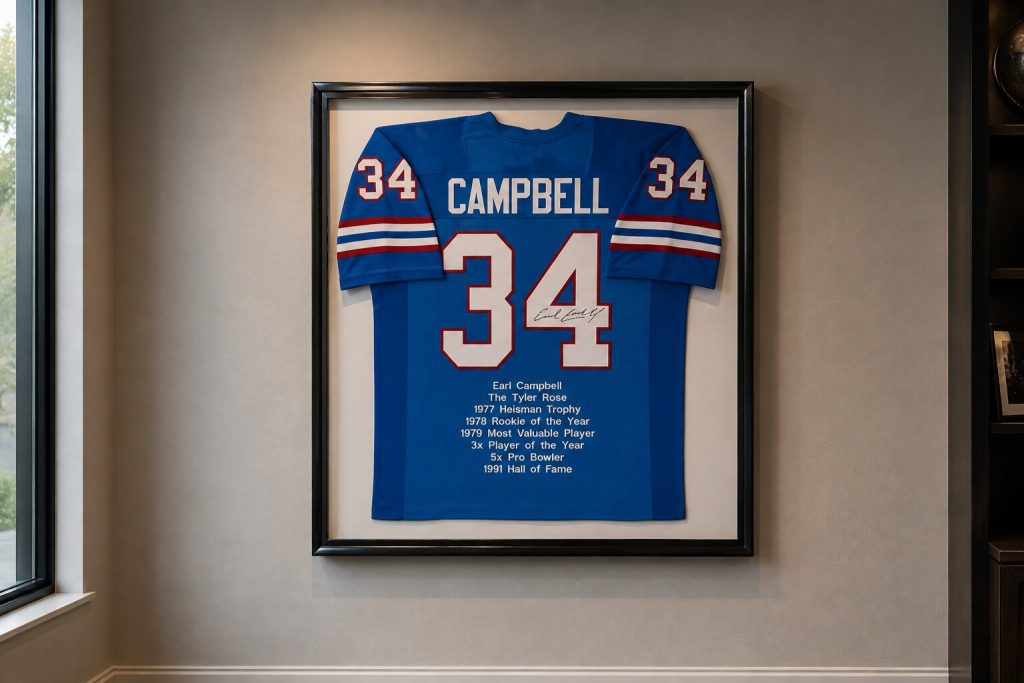
A signed jersey, game-worn uniform, or jersey from a favorite player can be much more than sports apparel. Once framed properly, it becomes a display piece that preserves the character of the jersey while making it possible to enjoy it every day.
Jersey framing is different from framing flat artwork. The depth, fabric, shape, lettering, signatures, and other details all need to be considered when designing the finished piece.
Why Do Jerseys Need Specialized Framing?
A jersey is a three-dimensional textile rather than a flat photograph or print.
It needs enough depth inside the frame to accommodate the fabric without compressing it against the glazing. It also needs to be positioned and supported so that the important parts of the jersey remain visible.
For most sports jerseys, that means displaying the player name and number prominently while maintaining a natural shape.
The finished frame is essentially being designed around the jersey rather than trying to fit the jersey into a conventional picture frame.
How Should a Jersey Be Positioned?
There are several ways to display a jersey.
A traditional presentation shows the back of the jersey so the player’s name and number are clearly visible. Others may be displayed from the front when a team crest, signature, championship patch, or another important feature makes that side more meaningful.
Sleeves can also be positioned differently depending on the jersey and available space.
The goal isn’t simply to make the jersey fit. Its shape should look intentional and the details that make the piece important should remain visible.
Should a Jersey Be Folded Inside the Frame?
Some folding is often necessary, particularly around sleeves and excess fabric.
The important distinction is between carefully arranging the jersey and simply folding it until it fits.
A custom frame provides control over the overall dimensions and depth, allowing the jersey to be displayed with proportions that make sense for the garment.
Football, hockey, basketball, baseball, and soccer jerseys all have different shapes, so the best arrangement can vary considerably.
Choosing a Background for a Framed Jersey
The backing becomes a major part of the finished design because it surrounds a relatively large three-dimensional object.
Neutral backgrounds can keep attention on the jersey, while colors related to the team can sometimes create a stronger presentation.
That doesn’t mean every red jersey needs a red background.
Contrast is often more effective than an exact color match. The goal is to make the jersey visually distinct while keeping the entire design balanced.
Choosing the Frame
Jerseys usually require deeper framing than photographs, prints, or posters.
The frame needs enough depth to accommodate the garment, backing, mounting, and glazing while still creating a finished presentation.
Frame style can range from simple and contemporary to more substantial traditional profiles.
A signed professional jersey might look excellent in a restrained black frame, while another piece may suit a wood or metallic finish.
As with other types of custom framing, the jersey itself should guide the design rather than automatically matching the room where it will hang.
What About Signed Jerseys?
An autograph can dramatically change how a jersey should be approached.
If the signature is part of what makes the piece valuable or meaningful, its visibility should be considered when determining the orientation and positioning of the jersey.
Preservation also becomes more important.
Light exposure can affect both fabrics and signatures over time. Glazing with UV protection can help reduce exposure to ultraviolet light, although important memorabilia should still be kept away from prolonged direct sunlight whenever possible.
Can You Add Photos or Other Memorabilia?
Yes. A jersey display doesn’t have to contain only the jersey.
Photographs, tickets, trading cards, plaques, patches, medals, or other related pieces can sometimes be incorporated into the overall presentation.
The key is restraint.
Adding memorabilia should strengthen the story behind the jersey rather than overcrowding the frame. A signed jersey and one meaningful photograph can sometimes create a stronger display than trying to include every related item.
For projects involving several different objects, DeSola also provides memorabilia framing for collectibles and keepsakes that require a custom display.
Where Should You Display a Framed Jersey?
Framed jerseys can work in considerably more spaces than a traditional sports-themed room.
They are commonly displayed in home offices, entertainment rooms, bedrooms, game rooms, businesses, and dedicated memorabilia collections.
Because jerseys can create fairly large finished pieces, consider the available wall space before settling on the final dimensions.
A custom design allows the presentation to be sized around both the jersey and how you intend to display it.
Is Professional Jersey Framing Worth It?
For an inexpensive replica jersey, professional framing is largely a matter of how you want it presented.
For a signed, game-worn, collectible, or personally meaningful jersey, the construction and mounting become much more important.
Professional custom framing gives you control over how the jersey is positioned, how it is supported, the depth of the frame, the background, glazing, and any additional memorabilia included in the display.
The result should look like a finished collection piece rather than clothing placed inside a large frame.
Custom Jersey Framing in Spring, Texas
Whether you’re framing a signed professional jersey, a jersey from your own playing days, or one connected to a memorable season or event, the display should be designed around what makes that particular piece important.
DeSola Glass, Art, & Frame Gallery provides custom sports jersey framing in Spring, Texas, with framing options designed specifically for jerseys and sports memorabilia.
Bring the jersey with you so the piece can be evaluated and the framing design developed around its size, colors, signatures, and the details you want to showcase.