Canvas artwork doesn’t always arrive ready to hang. Some pieces are purchased or delivered as loose canvas, while others are already stretched over wooden stretcher bars but still need a finished presentation.
How the canvas should be handled depends on its current condition, dimensions, artwork, and the look you want once it is displayed.
What Does It Mean to Stretch a Canvas?
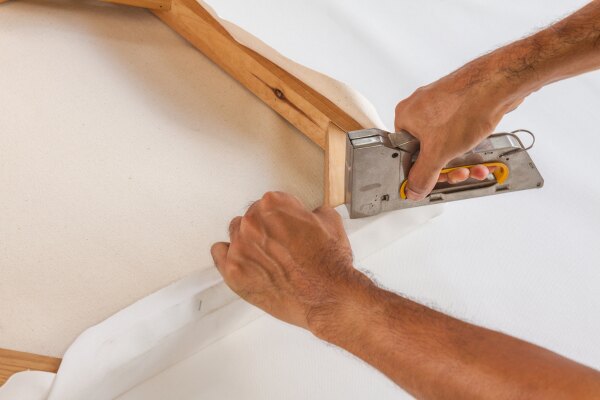
Canvas stretching is the process of securing a loose canvas over a wooden stretcher-bar framework.
The canvas is carefully positioned and tensioned across the structure so the artwork remains properly aligned and the surface has consistent tension.
This creates the familiar three-dimensional form associated with paintings and canvas prints.
If your artwork is currently rolled or unstretched, DeSola provides professional canvas stretching for preparing canvas artwork for display or framing.
Can You Hang a Stretched Canvas Without a Frame?
Yes.
Once properly stretched, many canvases can be displayed without an additional decorative frame.
This creates a simple presentation where the artwork itself remains the primary visual element. It is particularly common with contemporary paintings and canvas prints.
Whether it looks finished without a frame depends partly on the artwork and the edges of the canvas.
Some canvases are designed specifically for frameless display. Others look more complete once a frame is added.
Traditional Frames for Canvas Artwork
A stretched canvas can also be placed inside a traditional picture frame.
Because a canvas has depth, the frame needs to accommodate both the dimensions and thickness of the stretched artwork.
The frame can be understated or decorative depending on the piece.
Traditional frames can work particularly well with paintings where the frame is intended to become part of the overall presentation. The right profile can add visual weight, provide contrast, or reinforce characteristics already present in the artwork.
What Is a Floater Frame?
A canvas float frame is a popular option for canvas artwork.
Rather than covering the outer edge of the canvas, the frame is designed to leave a small visible space around it. This creates the appearance that the canvas is floating within the frame.
The entire face of the artwork remains visible while the frame provides a finished border around it.
Floater frames are frequently associated with contemporary artwork, but the choice ultimately depends on the individual piece rather than a particular style rule.
Does Canvas Artwork Need Glass?
In many cases, stretched canvas artwork is framed without glass.
This allows the texture and surface of the canvas to remain visible and avoids placing glazing directly in front of the artwork.
However, framing requirements can vary depending on the medium, condition, value, and characteristics of the individual piece.
If you’re unsure how a particular canvas should be displayed, having the actual artwork evaluated is preferable to assuming that every canvas should be treated the same way.
Frame Proportions Matter With Canvas
Canvas artwork can range from very small pieces to extremely large paintings.
As the artwork becomes larger, the proportions of the frame become increasingly important.
A frame profile that looks substantial around a small canvas may appear too narrow around a large one. Likewise, an overly heavy frame can overwhelm smaller artwork.
The depth of the canvas also needs to be considered.
Custom framing allows the frame to be selected around the actual size and construction of the stretched piece rather than forcing it into a predetermined frame.
What About Oversized Canvas Artwork?
Large canvases require particular attention to their underlying structure and tension.
The stretcher system needs to provide appropriate support across the dimensions of the artwork. The finished size and weight also become important considerations when planning how the piece will ultimately be displayed.
For oversized artwork, evaluating the actual canvas before deciding on the final presentation is especially useful.
Should You Stretch a Rolled Canvas Yourself?
Stretching a canvas may look straightforward, but maintaining appropriate tension while keeping the artwork square and correctly positioned requires care.
Uneven tension can affect how the canvas sits on the stretcher bars, while incorrect positioning can create problems with the visible composition.
This becomes particularly important with original artwork, valuable pieces, and canvases where very little material is available around the edges.
Professional stretching provides an opportunity to evaluate the canvas and determine an appropriate stretcher configuration before it is prepared for display.
Choosing the Finished Look
There isn’t one correct way to display every canvas.
Depending on the artwork, you might choose:
- Stretched canvas without an additional frame
- A traditional decorative frame
- A simple contemporary frame
- A floater-style frame
- A more substantial frame for a large piece
The artwork itself should drive that decision.
The colors, style, dimensions, edge treatment, and intended display location can all influence which option looks most appropriate.
Canvas Stretching and Framing in Spring, Texas
Whether you’ve purchased a rolled canvas, have an original painting that needs to be stretched, or want to add a finished frame to an existing canvas, the first step is determining what the artwork actually needs.
DeSola Glass, Art, & Frame Gallery provides canvas stretching and framing from its Spring, Texas location.
Bring your canvas with you and the DeSola team can evaluate the piece, discuss how you want it displayed, and help determine an appropriate approach.